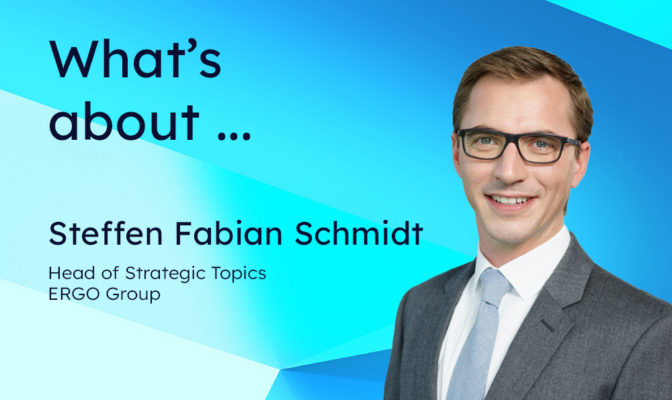
We have been an established player in the German strategic communications market for 30 years now. Over the course of our company’s history, several of our colleagues have moved on to other companies, associations, institutions, start-ups or other consultancies. We have maintained collegial, friendly contact with many of them since. From now on, every six weeks we will ask one former colleague: What are you up to right now?
As Head of Strategic Topics within Global Corporate Communications at ERGO Group, you are responsible for addressing major issues facing the insurance industry as well as broader societal and consumer-related topics. What attracts you to this global, content-driven role?
What I find most appealing is the combination of creative freedom and strategic oversight. My team and I have the opportunity to shape topics, experiment with new formats, and at the same time ensure that everything remains aligned with ERGO’s overall strategy – in close collaboration with our Board members.
The role also allows me to remain a generalist: dealing with everything from industry trends and societal debates to lighter football-related topics that help make our brand more tangible and relatable. What I particularly enjoy is the international exchange with colleagues across our markets – from Beijing to Palo Alto. We learn a great deal from one another, compare perspectives, and develop communications that work across national borders. It doesn’t always work perfectly, but it keeps getting better.
The insurance industry continues to be shaped by digital transformation. What role do AI and data-driven tools play in your internal and external communications?
AI has become an integral part of our corporate strategy and, consequently, of our day-to-day communications work. We use it throughout the entire communications value chain – from media monitoring and research to content creation for a wide range of channels.
With “ERGO GPT,” our proprietary GPT solution, employees across the company have secure access to AI, supported by clear guidelines for its responsible use. Another true game changer for us has been our data-driven editorial management system. It enables us to manage communications in a more structured and integrated way – and, frankly, more efficiently as well, since duplicate efforts become visible and can be avoided.
Which experiences from strategic communications consulting are most valuable for your in-house role today?
My consulting background has provided me with three key strengths.
First, the ability to translate complex issues into clear communication strategies while taking different stakeholder perspectives into account. Second, the mindset of a generalist: having worked across many industries and business models helps me today to navigate the broad range of topics at ERGO and set priorities more effectively.
Third, I have retained a strong sense of project discipline. Great concepts are important, but ultimately they must work in practice and be manageable for the teams responsible for implementing them. Strategy and execution need to go hand in hand; otherwise, even the best communication strategy remains nothing more than a PowerPoint slide.
More about Steffen Fabian Schmidt on LinkedIn.